Traditional Chinese Medicine (TCM) is a unique system to diagnose and cure illness, and it has been in practice for nearly 2000-3000 years.
It is an ancient medical system that takes a deep understanding of the laws and patterns of nature and applies them to treat the human body. Chinese medicine has developed continuously with the clinical conditions that has been under constant change and it even continues to change today. The systematic approach of TCM and its clinical effectiveness has made it a great theory of medicine. It has been the main source of treatment in the Eastern countries and it has gained popularity recently, in the West, where it is considered an alternative medicine.
The clinical diagnosis and treatment in Traditional Chinese Medicine are mainly based on the yin-yang and five elements theory. These theories apply the phenomena and laws of nature to the study of the physiological activities and pathological changes of the human body and its interrelationships.
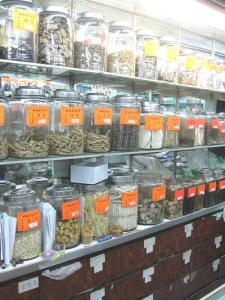
Graham_Street_Food_Market_Chinese+Medicines
One of the most fundamental ways to develop and maintain physical and spiritual health is by cultivating an internal support system, which is the primary function of the Traditional Chinese Medicine. Nature alternates between a rhythm of movement and stillness, the activity of the day quiets at night, and the exuberance of summer is internalized and nurtured during the stillness of winter.
TCM is based on this viewpoint that the energy and spirit of the body can be renewed after stillness and the flowing movement of Qi. Both stillness and movement are necessary for the regulation of the body, regulation of breath and regulation of mind.
Traditional Chinese Medicine is based mainly on the Taoist belief that everything in this universe is interconnected, what happens in one part of the body affects every other part of the body. The mind and the body are not separate but a part of the energy system, and the organs and organ systems are interconnected structures that work together to keep the body functioning well.
Major Treatment Modalities
The typical TCM therapies include acupuncture, herbal medicine, dietary therapy, and qigong and tai chi exercises that deal with breathing and movement.
- Acupuncture: Acupuncture accomplishes treatment by stimulating certain areas of the external body and helps in the smooth flow of Qi.
- Herbal Medicine: Herbal medicine acts internally on zang-fu organs to strengthen and support them.
- Qigong: Qigong exercise restores the orderly information flow inside the network through the regulation of Qi through their simple movements and postures. Some Qigong systems emphasize on breathing techniques.
- Healing Food: Healing foods are based on their energy essences and not on their nutritional value.
- Chinese Psychology: Chinese psychology is the understanding of emotions and their relationship to the internal organ systems and their influence on health.
All these therapies appear very different in approach but they all share the same underlying sets of assumptions and insights in the nature of the human body and its place in the universe. Some scientists call the Traditional Chinese Medicine as “Information Therapy”.
Herbal Medicine and Modern Pharmacology
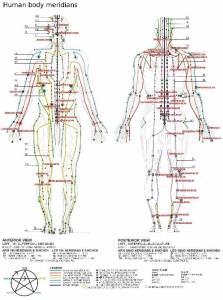
Chinese_meridians chart
Research shows that there is a coincidence between the traditional plant remedies and the known pharmacological activity of plant constituents. However, there are differences between herbal medicine and medicine based on pharmaceutical drugs.
The complexity of plant materials makes it more balanced and it has less side-effect than medicine based on isolated active ingredients. The herbs are always combined and their different components balance each other, and they undergo a mutual synergy which increases their efficacy and enhances their safety. Herbal medicine does not treat symptoms alone but it primarily seeks to correct internal imbalances. The therapeutic intervention of Traditional Chinese Medicine encourages the self-healing process.
Diseases Treated with Traditional Chinese Medicine
Traditional Chinese Medicine is used to treat a range of conditions and the most common disorders that can be treated are:
- Skin diseases: psoriasis, acne, eczema, uriticaria and rosacea.
- Respiratory conditions: asthma, chronic coughs, bronchitis, and allergic and perennial sinusitis and rhinitis.
- Urinary conditions:
- Diabetes: treatment and prevention.
- Rheumatological conditions.
- Gastro-intestinal disorders: bowel syndrome, chronic constipation and ulcerative colitis.
- Hepatitis
- HIV
- Chronic fatigue syndromes.
- Psychological problems: depression and anxiety.

 Hi, I'm Sammy, I'm the owner of this website. I'm passionate about natural health and strive to only include helpful and reliable information.